The Minimal, Secure Chrome Setup for Deep Work: A 7‑Extension Stack
In today’s knowledge workplaces, deep work happens in the browser more than ever. A lean, secure setup keeps distractions low and focus high. The right extensions can automate tedious tasks, shield privacy, and keep tabs organized—all without turning your browser into a security liability. This guide by Lars Erik Rydberg presents a practical, minimally invasive 7‑extension stack and a universal 10‑minute quality‑check workflow you can run after every install. It is designed for marketers, developers, founders, researchers, and remote teams who depend on fast, reliable browser workflows.
The Core Idea: Quality Over Quantity
Many teams accumulate extensions that overlap in function and permissions, creating unnecessary noise and risk. Every add‑on expands the attack surface and can slow browser performance. A minimal stack, chosen for a clear purpose and disciplined permissions, delivers consistent gains in speed, privacy, and focus. The goal is not feature bloat, but a predictable workflow: block noise, protect data, manage credentials, and keep sessions tidy with guardrails you can audit quickly.
The Practical Seven-Extension Stack
- uBlock Origin: The core shield against ads and trackers. By reducing page clutter, it lowers memory use and prevents data-collection scripts from loading.
- DuckDuckGo Privacy Essentials: Blocks trackers and encrypts connections where possible. It complements uBlock Origin by addressing telemetry that some ad blockers might miss.
- Bitwarden: A trusted password manager that centralizes credentials and generates strong passwords. It reduces reuse risk and speeds up logins across work applications.
- LanguageTool: Real‑time grammar and style checks for emails and docs. It shortens proofreading cycles and improves communication standards across teams.
- Dark Reader: Improves readability in dim environments or during long sessions. A calmer visual surface reduces eye strain during intense deep work blocks.
- OneTab: Consolidates open tabs into a single list, dramatically trimming the memory footprint and reducing context switching time.
- Session Buddy: Saves and restores work states after restarts. This helps you reproduce exact tab sets for review without reloading dozens of pages manually.
The 10-Minute Quality-Check Workflow
After installing a new tool, follow these steps to ensure your browser remains secure and efficient:
- Verify permissions: Confirm each extension requests only necessary scopes. Remove extensions with broad host permissions you don’t recognize.
- Update and audit: Ensure all extensions are current. Read the changelog for any changes in data practices.
- Privacy baseline: Run a quick check by visiting common sites and observing what still loads. If a site bypasses blocking, reconfigure the rules.
- Password hygiene: Create a test credential in Bitwarden to verify autofill works without exposing sensitive fields.
- Writing and readability: Test LanguageTool in a notes app to ensure it flags genuine issues without being intrusive.
- Tab discipline: Use OneTab to consolidate research sources and verify the performance benefits.
- Visual comfort: Skim a long-form article using Dark Reader and adjust contrast for optimal legibility.
- Session sanity: Save your current window set with Session Buddy and confirm the session restores cleanly after a restart.
- Quick rollback plan: Maintain a simple list of steps to disable a misbehaving extension and revert to your baseline setup.
Real-World Workflows Enabled by the Stack
Marketing Research Workflow
While researching competitive pages, uBlock Origin reduces ad clutter so you can compare content clearly. DuckDuckGo Privacy Essentials minimizes cross‑site trackers while you gather sources. Bitwarden manages access to analytics dashboards, while LanguageTool helps craft concise briefs. OneTab can then group these research pages by topic for later review.
Developer Productivity Workflow
When exploring API documentation, uBlock Origin keeps noise down from non-essential third-party scripts. LanguageTool catches grammar issues in READMEs or commit messages. Bitwarden handles internal tool credentials, while Dark Reader reduces glare during late-night debugging sessions. Session Buddy ensures you can restore your exact toolset after a browser crash.
Browser Organization Workflow
Create topic folders in OneTab (e.g., “Research,” “Design Specs”) to rehydrate precise work states with a single click. Using LanguageTool across emails and note apps keeps communications precise, while regular quality checks prevent the accumulation of redundant, noisy extensions.
Best Practices and Avoiding Common Pitfalls
- Keep it lean: Prefer extensions with transparent permissions and clear editors. Remove anything you rarely use.
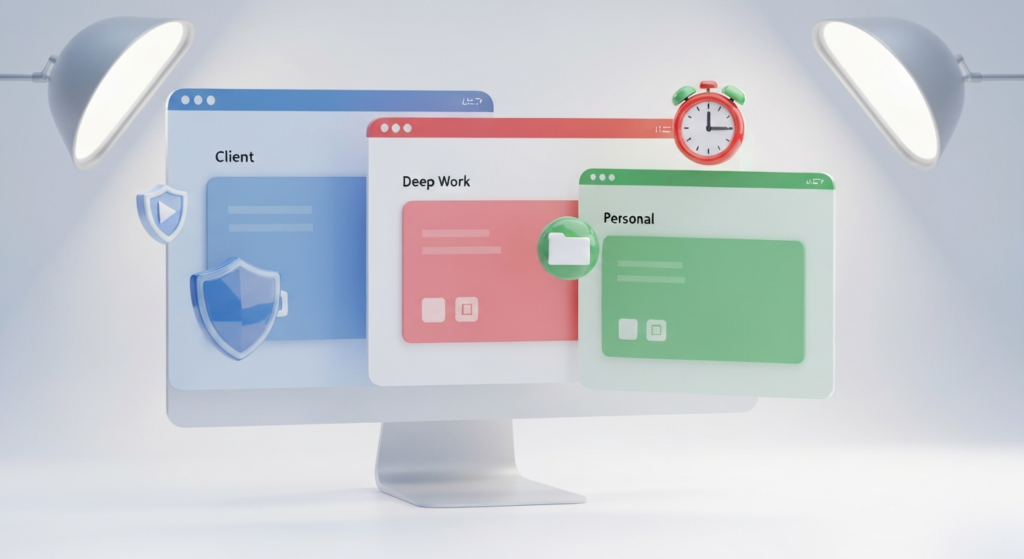
- Separate work and personal: Use a dedicated Chrome profile for work to avoid data cross-contamination.
- Review updates: Extensions may request more access over time; revisit these requests during major updates.
- Beware data overlap: Avoid using multiple tools that do the same job, as conflicts can degrade performance.
- Source trustworthiness: Only install extensions from reputable developers with active update cycles.
- Regular cleanups: Schedule a quarterly audit to prune unused extensions and refresh privacy settings.
Conclusion
A minimal, secure Chrome setup tailored for deep work unlocks clearer focus and steadier performance. The seven extensions highlighted here cover privacy, credential management, and organization without overwhelming your system. Pair them with a disciplined quality-check workflow to ensure your digital environment scales with your projects. At EpicWebTool, we continue to explore the best browser tools to help you build a more efficient and secure workday.