Introduction
Remote teams live in the browser. A dozen tabs per project, dozens of passwords, meeting notes scattered across apps, and routine tasks begging for automation can fracture focus and slow momentum. The right Chrome extensions, configured with disciplined workspace boundaries, can deliver faster access, stronger security, and repeatable processes.
This guide by Lars Erik Rydberg of EpicWebTool shows a practical, hands-on approach to building a secure productivity stack for remote work. You’ll learn how to manage tab sessions, select and configure a password manager, structure meeting notes for quick recall, and introduce browser automation—complete with a step-by-step setup and a thorough extension vetting checklist.
The Core Idea: Why a Browser Stack Matters
The fundamental problem in remote work is fragmentation. Project windows live in separate tabs, credentials drift between sites, and notes live in inboxes and docs you often forget to consult. While extensions offer solutions, they can also expand the attack surface of your computer.
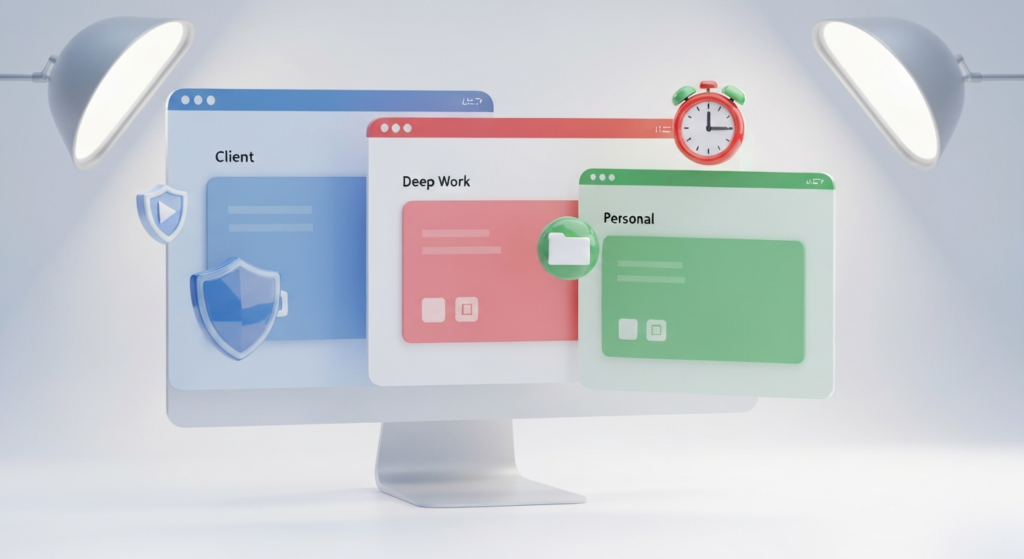
A secure stack treats Chrome as a collaborative workspace with clear separations: a dedicated work profile, top-priority extensions, and explicit data flows. By grouping tasks into focused tab sessions, locking credentials behind a trusted manager, and capturing notes in a centralized system, you gain speed without surrendering control. The strategy hinges on four pillars:
- Isolation: Dedicated browser profiles.
- Identity: Strong passwords and MFA.
- Surface Area: Limiting what extensions can access.
- Repeatability: Using templates and flows that can be shared with teammates.
Step-by-Step Setup: Building Your Stack
1. Create a Dedicated Work Profile
Create a dedicated work profile in Chrome. Sign in with a work Google account, disable personal sync, and enable a starter set of work-related bookmarks. This separation minimizes cross-contamination of data and keeps security controls focused on professional tasks.
2. Secure Your Identity
Install a reputable password manager extension such as Bitwarden or 1Password. Create a strong master credential, enable Multi-Factor Authentication (preferring hardware keys), and configure autofill only on approved domains. Review auto-fill rules regularly to prevent credentials from leaking into personal sessions.
3. Organize with Tab Session Management
Add a tab sessions manager to create project-specific sessions (e.g., “Q2 Research” or “Client A Demo”). Enable automatic saving of tab groups on exit. This keeps your project context intact without leaving dozens of orphaned tabs open that drain system resources.
4. Centralize Meeting Notes
Set up a meeting-notes workflow with a centralized app like Notion or Obsidian. Install the relevant browser extension and create a simple template for meetings: date, attendees, agenda, decisions, and action items. For transcripts, pair your notes with a service like Otter.ai to capture and link quotes directly to your documentation.
5. Introduce Browser Automation
Introduce automation for repetitive tasks. Install Tampermonkey for user scripts or a browser-automation extension like Power Automate for Chrome. Create starter flows that copy meeting notes to a central archive or fill recurring form fields with a template. Start small and iterate as your needs grow.
The Extension Vetting Checklist
Use this practical, reusable guardrail before adding any new tool to your browser:
- Developer Credibility: Is the publisher reputable? Is the extension updated within the last 60–90 days?
- Permissions Requested: Do the permissions align with the extension’s purpose? Avoid extensions requesting broad, unnecessary access.
- Data Handling: Does the privacy policy state data is stored locally or encrypted in the cloud? Look for zero-knowledge claims.
- Auditability: Is the code open-source or has it undergone independent security audits?
- Security Posture: Does it support phishing protection and sandboxing?
- Review Signals: Look for recent positive reviews and responsive support channels.
- Enterprise Controls: For teams, does the tool offer admin controls or SSO?
- Data Portability: Can you export your data if you decide to discontinue the service?
Practical Workflows in Action
Marketing Research Workflow
Open a dedicated “Research” tab session to collect sources across industry reports and competitor sites. Use your password manager to log into analytics dashboards with restricted autofill. Take notes in a centralized Notion page using a template, then run a simple automation to push key insights into a weekly report sheet.
Developer Productivity Workflow
Maintain separate tab groups for coding, testing, and documentation. Use a password manager to access cloud IDEs and CI services with hardware-based MFA. Capture quick notes during standups in Notion and use light scripting to automate issue creation from commit messages.
Research and Organization Workflow
Build a “research shrine” by linking a Notion workspace to a tab-session collection. Tag notes by project and hypothesis to accelerate synthesis. Schedule periodic exports of annotated sources to a shared drive to keep the research evergreen and accessible.
Best Practices and Risks to Avoid
- Security First: Keep your work profile isolated and never reuse personal passwords.
- Permissions Discipline: Grant only necessary access and review permissions quarterly.
- Quality Over Quantity: Favor a small, well-vetted set of tools rather than a sprawling toolkit.
- Data Hygiene: Avoid siloed notes; automate exports to a central, auditable archive.
- Stability Over Novelty: Test new tools in a sandbox profile before deploying them to your primary work environment.
Conclusion
A disciplined Chrome-based stack—tab sessions for focus, a robust password manager for security, centralized notes for clarity, and targeted automation—can materially raise productivity without compromising privacy. The right extensions, vetted and deployed with care, turn browser work into a repeatable, secure workflow. EpicWebTool regularly explores and reviews browser tools for professionals, helping teams build smarter, safer digital routines.