From 200 Tabs to One Workspace: A Practical Chrome Workflow
Browsers are essential for knowledge work, yet a crowded tab bar often kills focus. The right Chrome workflow turns chaos into context: a disciplined stack of tab managers, session tools, and read‑later capture that preserves the thread of work without bloating memory or exposing risk. In this guide, I’ll outline a practical setup I’ve tested with marketers, developers, researchers, and remote teams. You’ll learn how to assemble a repeatable workflow, move from overload to a single, coherent workspace, and vet extensions in a permission‑safe way. I’m Lars Erik Rydberg, writing from EpicWebTool, where we regularly investigate browser tools for real professional use.
Section 1: The Core Idea
The problem is not “too many tabs” but lost context—projects fragment across windows, sessions, and bookmarks. A practical workflow treats tabs as transient assets you curate, not permanent clutter. Tab managers convert open tabs into structured lists or workspaces, so you can restore a project state at a tap. Session tools lock in environments for specific tasks, preserving layouts, scroll positions, and multi‑device contexts. Read‑later capture hands off articles and docs for later synthesis, preventing important sources from slipping through the cracks. The result is a repeatable, permission‑aware stack: one workspace per project, quick capture of relevant reads, and reliable restoration of earlier states.
Section 2: Tools, Strategies, and Methods
Practical tool selection matters as much as how you use them. Here’s a compact, field‑tested stack and how to employ it.
Tab Management
Use a dedicated tab manager to convert chaos into navigable records.
- OneTab or Toby: These extensions can collapse current tabs into a shareable list or board. Use clear project names and tag lists by topic (e.g., “Marketing_Q3_Retail,” “Dev_Services_API”).
- Session Buddy or Workona: These help you save complete sessions or workspaces. Treat each workspace as a snapshot you can restore without reopening every tab individually.
- Pro tips: Create naming conventions (Project/Phase/Date), assign color tags, and set a routine to prune stale sessions weekly.
Session Tools and Workspaces
Keep your context intact across devices and days.
- Workona: Provides true workspaces with panels and app integrations. It shines when projects span docs, dashboards, and code repos.
- Task Separation: Use sessions to separate tasks (e.g., “Q2 Competitive Analysis” vs “Internal Docs Sprint”). Pin critical tabs in each workspace and rely on the restore feature after meetings or outages.
- Practical pattern: Treat each project as a single “workspace corridor,” not a random pile of tabs. Move sources and tools you reuse into the relevant corridor.
Read-Later Capture
Capture high-quality reads without interrupting current work.
- Raindrop.io and Pocket: These tools provide taggable, searchable libraries. Raindrop’s folders and tags map well to projects; Pocket’s offline access is helpful for travel or downtime.
- Strategy: Clip or save sources as you discover them, then classify by project, priority, and type (article, doc, slide deck). Return later from the central workspace to finish reading in context.
Practical Workflow Integration
Connecting capture to your workspace is vital for a seamless experience.
- Create a single “inbox” file or folder in your read‑later tool, then route items into project tags within a tab manager or workspace.
- Schedule a weekly “cleanup and synthesize” session: skim saved reads, drop key sources into project notes, and purge duplicates. This keeps the library lean and actionable.
Section 3: Real-World Workflows
Marketing Research Workflow
- Open sources related to a campaign in a dedicated Workona workspace named “Marketing_Q3_Campaign.”
- Save primary sources to Raindrop with tags like #competitors, #trends, #creative.
- Use OneTab/Toby to collapse historical research into a single list; restore only the relevant cluster before a briefing.
- After reading, draft a quick briefing note in the workspace and export a summary to a shared doc.
Developer Productivity Workflow
- In a “Dev_Services_API” workspace, group tabs for API docs, repo pages, issue trackers, and testing dashboards.
- Save long reference docs to Raindrop for quick reference; push code-related pages into the session as a folder.
- Use a daily ritual: snapshot the exact tab arrangement and notes, then clear non-essential tabs to reduce memory load.
Research Workflow
- Start with a broad sweep: gather literature in a “Research_Landscape” workspace and convert sources to a read-later collection.
- When writing, restore the workspace, re-open key papers, and pull quotes directly from clipped sources.
- Archive completed projects as separate sessions to keep the history clean.
Browser Organization Workflow
- Maintain a core “Workspace Backbone” with evergreen sources (company policies, design systems) always open in a pinned tab set.
- Use a side panel to keep task lists visible while you browse.
- Periodically prune unused extensions and stale sessions.
Section 4: Best Practices, Risks, and Security
Best Practices
- Limit your extension count to what you actually use to minimize bugs and data exposure.
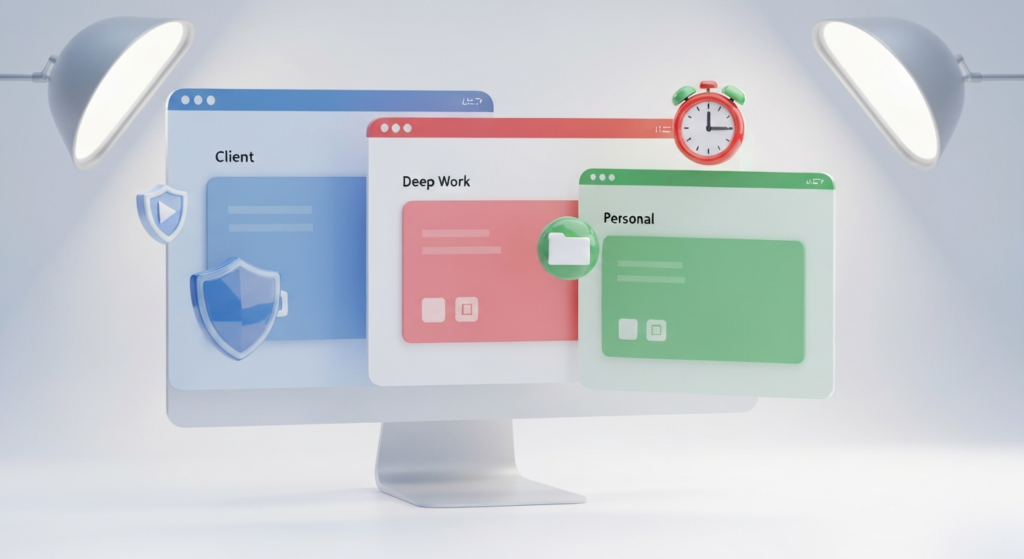
- Separate work and personal contexts with distinct Chrome profiles.
- Regularly audit memory use via the Chrome Task Manager and back up key workspace configurations.
Risks and Common Mistakes
- Relying on a single tool can backfire. Diversify within a coherent architecture.
- Avoid granting “All data on the websites you visit” permissions unless necessary. Favor minimal permissions.
- Clipping everything without taxonomy leads to paralysis. Always use project tags.
The Permission-Safe Extension Selection Checklist
- Does the extension request only essential permissions (tabs, storage, notifications)?
- If cloud sync is offered, what data is synced? Can you use local storage instead?
- Is there a clear privacy policy and data-handling statement?
- Is the extension open source or from a reputable vendor?
- Can you disable or uninstall easily without losing your stored data?
- Are there clear indicators of security practices (automatic updates, secure connections)?
Conclusion
With the right stack and disciplined workflows, you can turn a torrent of tabs into a cohesive, project‑centered workspace. Tab managers give you structured access to your history, session tools preserve context, and read‑later capture keeps you moving without losing signal. The permission‑safe checklist reminds us that productivity should never come at the cost of security or privacy. At EpicWebTool, we help professionals work smarter, not harder. The right tools, used thoughtfully, can transform browser work into a precise and reliable routine.